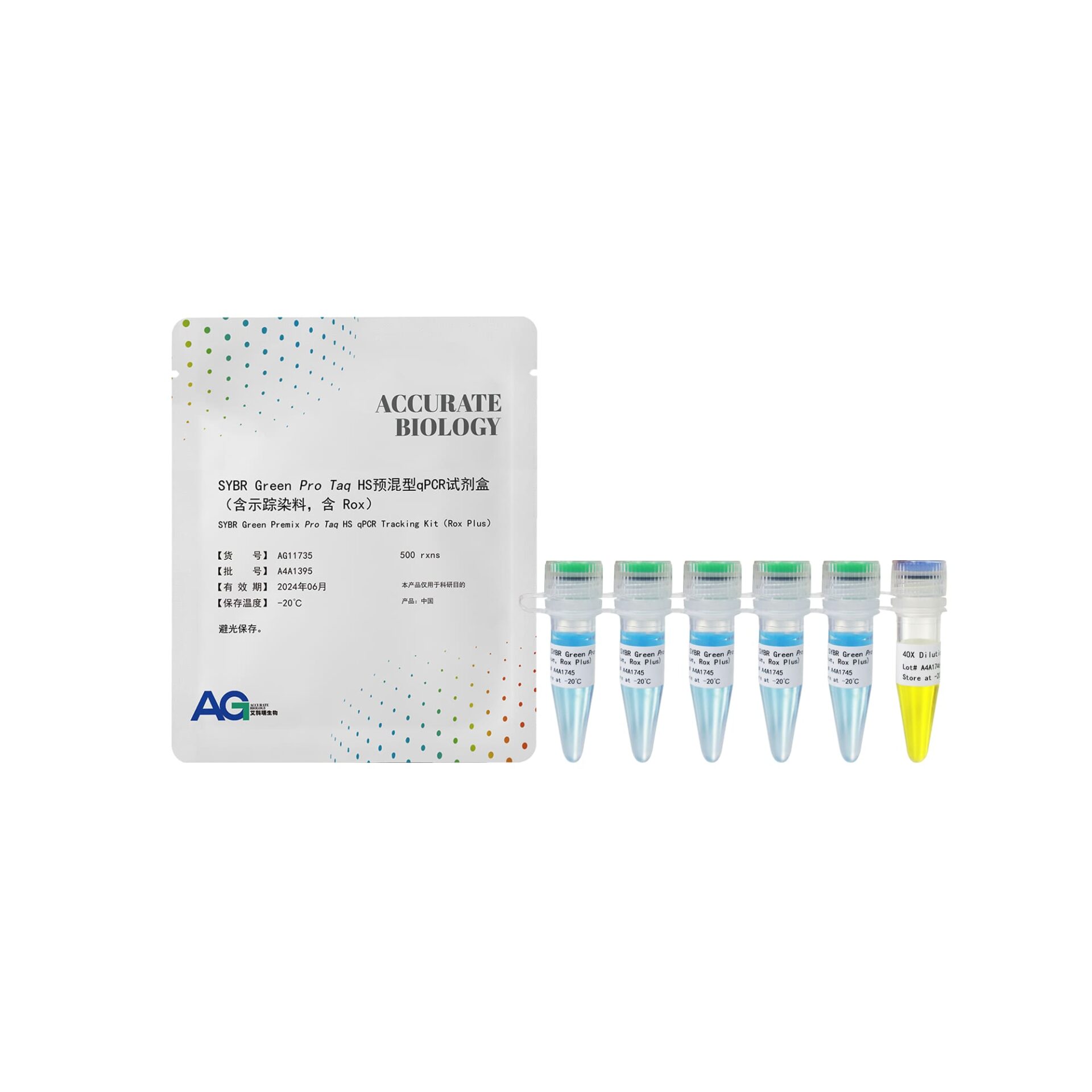
This product is a special reagent for qPCR using SYBR Green chimeric fluorescence method. 2X Premix is pre-mixed with ROX Reference Dye, and the final concentration of ROX in the reaction is 0.08 μM, which is convenient to use without additional addition. Meanwhile, 2X Premix is equipped with a blue dye, which is paired with a yellow template dilution buffer [40X Dilution Buffer (Yellow)] to visualize the pipetting process: after mixing the yellow dilution buffer with the template and adding it to the blue reaction solution, the solution will change from blue to green; you can confirm the addition of the template based on the change in color, which is conducive to the addition of a large number of samples and reduces the probability of mishandling. Reduce the probability of misoperation.
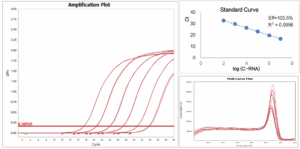
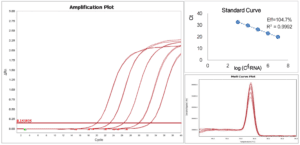
In this product, the SYBR Green I concentration and PCR reaction system have been optimized, and the superior reaction performance of the Pro Taq HS system (mixed with Taq antibody), which can effectively inhibit non-specific amplification, improve PCR amplification efficiency, and can obtain a good working curve in a wide quantitative region for accurate quantitative detection of target genes.
① Blue dye is added to 2X Premix with yellow template diluent to visualize the pipetting process, improve the efficiency of sampling, and reduce the probability of mishandling.
② 2X SYBR Green Pro Taq HS Premix (Blue, Rox Plus) is premixed with ROX Reference Dye for ease of use and to effectively minimize experimental errors associated with the addition of ROX alone.
③This product is a 2X premixed solution, pre-mixed with SYBR. Green I, the reaction solution is very simple to prepare, only need to add primers, templates and RNase free water can be qPCR reaction.
④ This product is effective for SYBR The concentration of Green I and the PCR reaction system were optimized for high amplification efficiency and high amplification specificity.
| individual parts making up a compound | norm |
| 2X SYBR Green Pro Taq HS Premix (Blue, Rox Plus) | 1 ml X 5 pc |
| 40X Dilution Buffer (Yellow) | 500 μl |
Transportation temperature: -20℃ Ice bag transportation or dry ice transportation