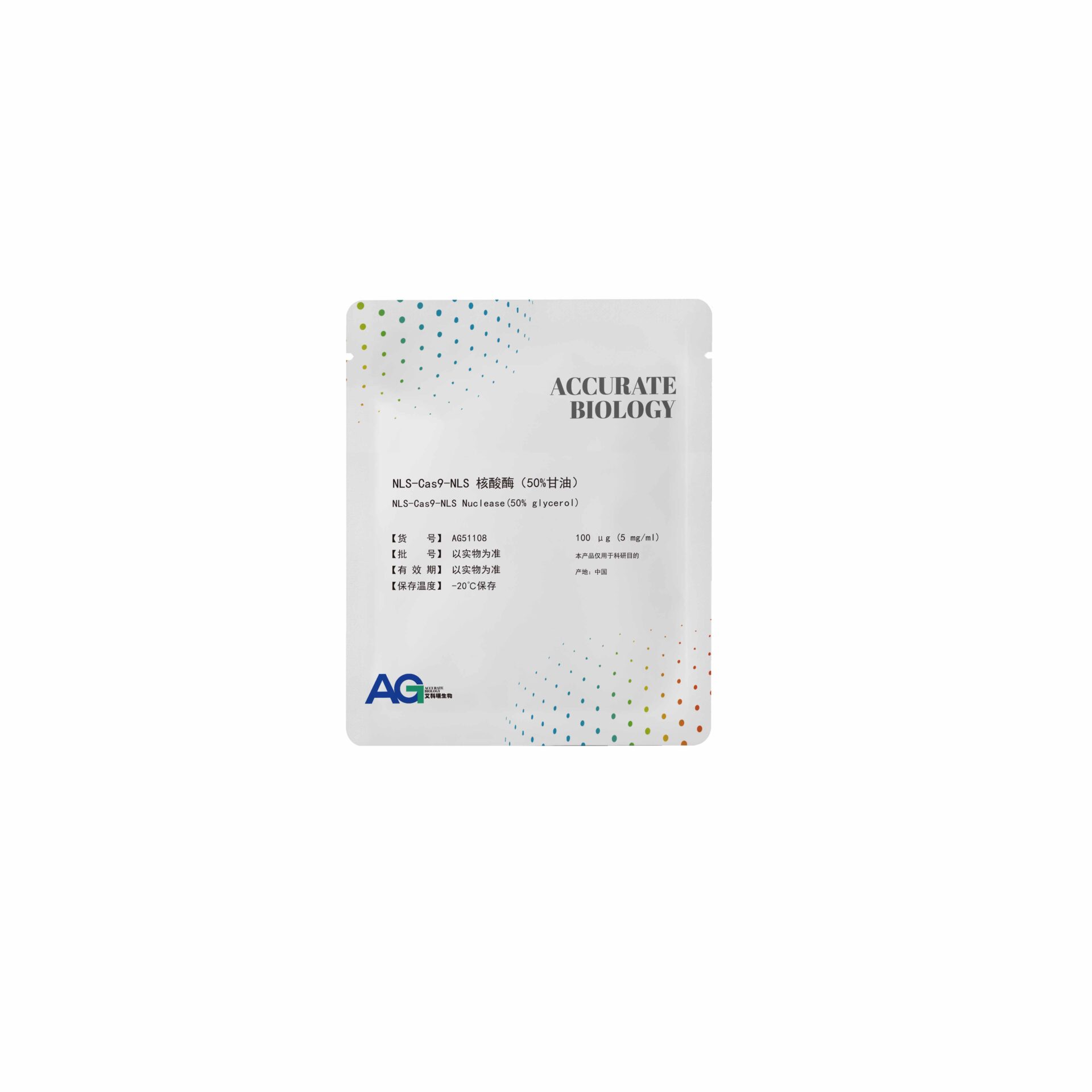
NLS-Cas9-NLS Nuclease (50% Glycerol)

Product Code: AG51108

- +

¥1,600

Product Description

This product is a combination of a wild-type Streptococcus pyogenes derived from a wild-type Streptococcus pyogenes (S. pyogenesThis product is a protein purified by recombinant expression in E.coli with a nuclear localization signal (NLS) modification at the N-terminus and C-terminus of Cas9 endonuclease. This product has good in vitro shearing and in vivo gene editing functions. It can recognize the PAM sequence of NGG under the guidance of guide RNA (sgRNA), and specifically cleave it by binding to double-stranded DNA to produce a double-stranded break about 3 bases upstream from the PAM sequence in the target DNA. In addition, this product has crRNA and tracrRNA-dependent, target DNA-activated trans ssDNA cutting activity.

Product Composition
individual parts making up a compound norm
NLS-Cas9-NLS Nuclease (50% glycerol) (5 mg/ml) 20 μl
10X Cas9 Reaction Buffer 1 ml
Preservation and transportation

Storage temperature: -20℃ storage
Transportation temperature: dry ice transportation or -20℃ ice bag transportation

in vitro system

This product has the property of specific double-stranded DNA shearing, the target DNA is about 700 bp in length, under the designed sgRNA guidance, this product can double-stranded shear the target DNA, which will form two bands at about 200 bp and 500 bp on the gel. (Note: Cas9, sgRNA and target DNA are required for double-stranded shearing to occur.)

in vivo system

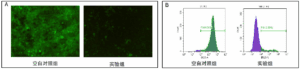
0.5 μg of the product and sgRNA targeting the EGFP locus were mixed with Lipofectamine.TM CRISPRMAXTM Cas9 Transfection Reagent (Invitrogen)TM) was transfected to 1.6 × 10⁵ In the 12-well plate system, the green fluorescence of the experimental group was significantly reduced compared with the blank control group (as shown in Figure A). In the fluorescence microscopy results, the green fluorescence of the experimental group was significantly reduced compared with the blank control group (as shown in Figure A), and the amount of fluorescent cells in the experimental group decreased by 83.12% compared with the blank control group under the counting of 15,000 cell passages by flow cytometry (as shown in Figure B). All the experimental results indicated that Cas9-NLS Nuclease produced effective gene editing of EGFP sites under the guidance of sgRNA.