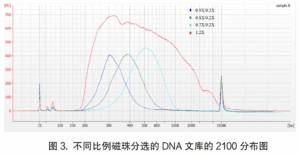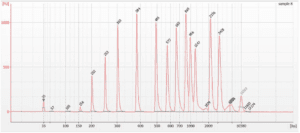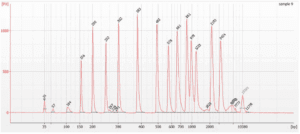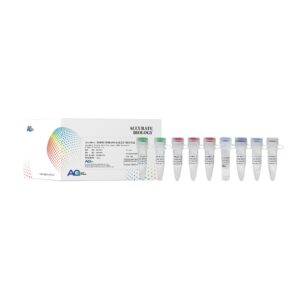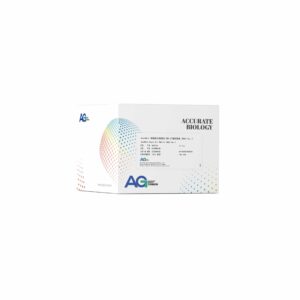
This product adopts superparamagnetic magnetic beads, together with the optimized buffer system, by changing the ratio of the input magnetic beads to the sample, it can realize the sorting of 100 bp ~ 1000 bp DNA fragments and the recovery of 50 bp ~ 30 kb fragments. The operation is convenient and fast. After binding with magnetic beads, the nucleic acid can be separated from enzymes, primers, salt ions and other impurities in the solution under the action of external magnetic field, and then through washing and elution steps, the purpose of purifying nucleic acid can be achieved, and the resulting DNA is highly pure, which can be applied to a variety of molecular biology experiments, such as second generation sequencing (NGS), qPCR/ddPCR/PCR, gene chips, and other molecular biology experiments.
1. Value for money;
2. Small inter-batch differences;
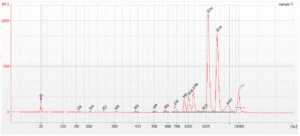
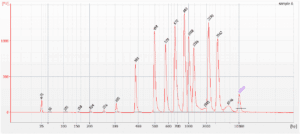
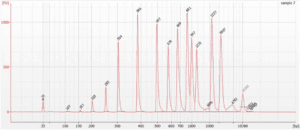
3. Recovery rates and library sizes are comparable to those of AMPureXP Beads;
4. Suitable for DNA, RNA library construction, with a number of library kits have good compatibility.
| individual parts making up a compound | AG12546 | AG12547 | AG12548 |
| MagSpherix DNA Beads | 1 ml | 10 ml | 100 ml |
Transportation temperature: ice pack transportation (to avoid freezing and drying out)